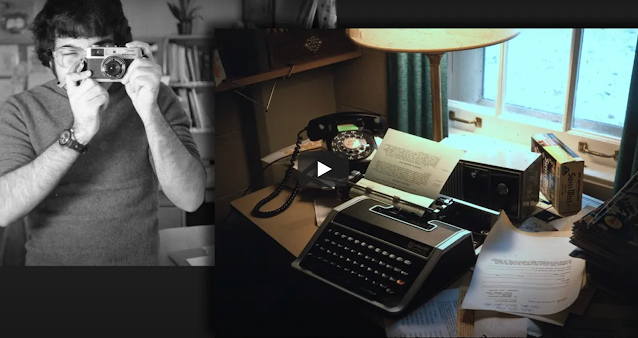
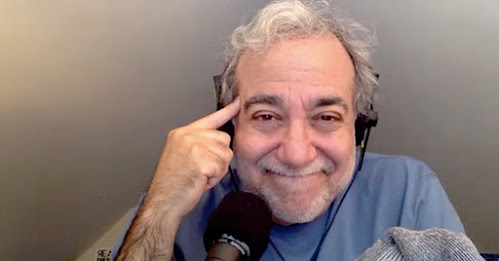
Me in 1976—reflecting on 1973: ‘My Watergate views may not be the reason I didn’t get the scholarship, but …’

Wednesday, July 29, 2026
On this date in 1976—50 years ago to the day—I turned in the following paper for a summer term journalism class at the University of Illinois. Honk if you perceive parallels to the media landscape of 2026.


all the president's men review
meyerson
29 july 76
journ 291

REVIEW: All the President's Men, by Carl Bernstein and Bob Woodward. Warner Paperback Library, 1975. 383 pp.

"O.K., Charles," I muttered as I entered the interview room in April 1973. "A 52-hundred dollar scholarship on the line here. Be cool and calm, and your chances are good."

So I faced the group of seven school-board and faculty officials in that conservative suburb of Chicago and told them I'd been accepted at Princeton, University of Chicago, University of Michigan and Northwestern but I thought instead I'd go to the University of Illinois majoring in journalism.

The questions started.

"A journalist, huh? Well, what do you think about this Watergate business?"

I don't know. Don't know if anyone's done anything wrong, but it seems a healthy process of reevaluation is going on....especially following executive abuses during the Vietnam war.....so, as long as it doesn't get out of hand--

"Don't you think it's gotten out of hand already?" "Isn't this just another witch-hunt, run by the
media this time?" "--a personal vendetta run by the liberal Eastern Establishment?"

No, no--I don't think so. It's important that we have the press around to keep the government in line. The government's still running, and there seems to be evidence that something's gone wrong here--we don't know for sure--so I think the investigation should go on. I'd rather overinvestigate and risk a slight inconvenience for the government than underinvestigate and let what may be major violations of our civil rights go unpunished.

Three or four interviewers nodded. The rest just looked at their notes. The subject changed, and ten minutes later I left the room uneasily.

My Watergate views may not be the reason I didn't get the scholarship, but I wonder--

All the criticism leveled at the media by the Nixon administration cast journalists as the villains in the national melodrama. My heroes--from Clark Kent to Mike Royko to my journalist father--were being fingered as the bad guys…and I was guilty by association.

But All the President's Men reversed the charges.

Most of the President's men have been removed from the White House, his second-string Vice President seems headed for defeat--either in August or November--and Carl Bernstein and Bob Woodward (or Dustin Hoffman and Robert Redford, if you insist) are folk heroes.

And that's the real value of All the President's Men.

Journalistically, Woodstein did nothing any other good journalist wouldn't have done, given the resources of the Washington Post and Deep Throat. The Arizona Republic's Don Bolles got killed for doing the same job on a different playfield, and there won't be any movies about him.

Not to discount the work of Woodstein: Their book and the resulting film do an intelligent, witty and accurate job of portraying the work of newspeople.

But the best part of All the President's Men is that it's removed most of the dirt dumped on the Fourth Estate during the Nixon years. Journalism schools are overcrowded, journalists are celebrities and aspiring reporters all over the country are asking questions, eyes peeled for future abuses of power.

All of which is fine with me, because, as I sheepishly told that interview panel in 1973, a healthy skepticism is just a small part of keeping the press lively and the nation free.


July 29, 1976, seems to have been a deadline day for that class, because I also turned in a review of six journalism books—concluding: “Surely, the nation faces the greater threat not from this bunch of reporters brandishing studied biases up front but from those who carry the concealed weapons of half-truth, deception and lies.”

Two cues for local news

Monday, August 26, 2024
[Crain’s Chicago Business kindly asked me to contribute some thoughts to its special-edition “Forum on local journalism and the news.” The version posted to Crain’s website omitted the explanatory hyperlinks I included. For the record, here’s my original draft—hyperlinks included.]

By Charlie Meyerson
Publisher, Chicago Public Square

As a mentor to up-and-coming journalists and a consultant to news organizations—legacy or startups, profit or nonprofit—I often cite two priorities for those plotting local news’ future.

1. Growing audience is Job No. 1, and email’s the key.

That means: Gather people’s email addresses. The top of any news website should include an invitation to “Sign up for updates via email.” I’ve gone so far as to recommend one local publisher announce loudly—on front page wraparounds for months—something like “This print edition is going away on [date certain]. If you want to keep getting the news, get us your email address now.” Then shut off the presses, pour all that production and distribution money into digital journalism, and charge advertisers a premium for reaching a community you’ll own like no other.

Email’s ability to connect all manner of content with an audience makes it the logical successor to everything from a daily or weekly newspaper to a nightly or hourly newscast. It can alert subscribers to text, photos, podcasts, video and more. Unlike the ever-flowing rivers of social media or the vagaries of search engine behavior, your email will be seen. And unlike websites, which an audience must remember to visit, your email’s always there, waiting, whenever anyone checks the inbox.

That said: Whether anyone opens that email or not is overwhelmingly a function of the subject line. So the corollary: Make your email great. That means compelling, non-repetitive subject lines, where the most interesting and engaging words come first—and so won’t be obscured on small screens. It also means informative but tight content—a dispatch designed as a satisfying experience in itself but also engaging enough to get readers to tap over to ad-supported web pages.

Bonus: Email can provide unmatched insights into your audience’s priorities.

2. Lose the paywall, put out the tip jar

Paywalls crimp audience growth, and that limits what you can charge advertisers. People won’t share content with friends or colleagues—your potential new readers—if those friends will smash, Wile E. Coyote-style, head-on into a paywall. A better approach: Make your content free for all—as public broadcasting and other media (notably in Chicago, the Sun-Times and the Reader) have done—but ask that growing audience to support your free content voluntarily. Maybe just 10% or 15% of your audience will kick in, but 10% of a growing number is … a growing number. (Compromise: A generous “gift link” program for paid readers.)

The mission’s vital

The plague of local government corruption, school and library book bans and election skulduggery with national consequences has made the importance of vibrant and engaging community news clearer than ever.

As a growing number of Americans get their news not on paper, but via phones and computers, the news business needs to meet them where they are. Email’s ideal for that—and for persuading them news is worth supporting.
_____

After 20 years in Chicago radio news—including WXRT-FM—
Charlie Meyerson joined the Chicago Tribune in 1998 to launch its pioneering email newsletters, including Daywatch. Since 2017, he’s applied the principles above daily in “Chicago’s new front page,” the free, reader-supported Chicago Public Square email newsletter. He’s also vice president of editorial for award-winning podcast production company Rivet360. (Photo credit: Steve Ewert.)

From dorm broadcasting to the digital frontier: A journalist’s journey

Thursday, August 24, 2023
I can trace the origin of my broadcasting career back to Aug. 24, 1973—early in my first year at the University of Illinois at Urbana-Champaign, when a tradition known as Quad Day gave campus student organizations a chance to introduce themselves.

In particular, I got to know student radio station WPGU—a story I shared in some detail with a speech to the University of Illinois Library team on the occasion of Homecoming weekend, Oct. 14, 2022.

To mark the 50th anniversary of that life-changing encounter, here’s video and a rough transcript of those remarks.

My hopes for journalism by 2030

Thursday, October 8, 2020
Invited by my friend and University of Nebraska Omaha Professor Jeremy Harris Lipschultz* to address the UNO Social Media Lab’s #Omaha2020 conference—assembled virtually today to predict the future of the news business over the next decade—I declined.

Events of the last four years in particular have dissuaded me from making predictions. 

Instead, I shared my hopes for the future of the news business—adapted in part from a January piece I filed for Newcity.

Got five minutes to spare? Here you go.


* To whose book, Social Media Communication, I’ve been honored to contribute through several editions.

Charlie Meyerson interviewed … about Charlie Meyerson

Sunday, September 6, 2020
This hasn’t happened much in my career, most of which I’ve devoted to profiling people far more interesting than I am.

But, twice in less than two weeks, I was honored to be interviewed about journalism, politics, radio, the origins of Chicago Public Square and my personal journey:

On Friday, I was a guest on Chicago Reader columnist Ben Joravsky’s podcast—and that was just seven days after Matt Baron had grilled me for the Common Ground Oak Park podcast.

So here, in the Charlie Meyerson interviews series, is—for lack of a better phrase—Charlie Meyerson interviewed …


… and Charlie Meyerson interviewed again.

Check out more of my conversations with thought-leaders through the years on this website, in Apple Music, on Spotify, via your favorite podcast player and at Chicago Public Square.

Effective email communication in times of crisis

Wednesday, June 24, 2020
“Times of crisis” pretty much describes this era for all of us, all the time, these days.

Ironically, as I mulled the Publicity Club of Chicago’s request that I speak on “Effective Email Communication in Times of Crisis,” I realized that that challenge isn’t all that different now from times of non-crisis.

Job One remains the same: Not taking the attention of your audience—any audience—for granted.


Presented here by popular demand (well, a couple of people asked): Slides and video from my virtual appearance before the Publicity Club, June 17, 2020.

Here’s the video.


And here are the slides.

1988: Chaos in the Chicago City Council

Thursday, September 5, 2019
This week’s transformative Chicago City Council development—the historic livestream video presentation of a committee meeting—brings to mind a time when the council was maddeningly tough to follow.

In 1988, I was a newbie City Hall reporter for WXRT-FM. It was an assignment I relished not—partly because the council’s procedures were bewilderingly opaque and byzantine.

But I channeled my journalistic frustration into creation of a series that won a nationwide United Press International award for documentary radio reporting.

So, let’s return to the year 1988. Eugene Sawyer was briefly Chicago’s mayor, and a young journalist was pissed off at the difficulty navigating … Chaos in the Council.


Related:
■ Me, far more enthusiastic about covering City Hall in 2012.
■ Another award-winning WXRT News investigation from 1984.
■ And check out some of my interviews with thought-leaders through the years on this website, in Apple Music, on Spotify, via Alexa-powered speakers, through your favorite podcast player, and at Chicago Public Square.

Tips for podcasters

Wednesday, June 12, 2019
Snappy answers to frequently asked questions:

What makes a great podcast?

Your answer’s as good as mine. Probably better. Depends on the interview’s goal. If you’re a funny TV host, and your goal is at least partly to entertain, it’s great interplay between the guest and the host, with lots of laughs or emotion along the way. But most of us aren’t Stephen Colbert; our goal is to connect our audience seamlessly with our guest and his or her insight. To that end, the less of us and the more of the guest and the guest’s wisdom the better. Some of the best interviews I’ve done have been those in which I just ask a little question and let the guests run with it. I get the first words (the words that explain why the guest is interesting or important) and the last words (to say whatever I want); I don’t feel compelled to be anything more than just a low-profile instigator along the way.


What’s the best way to structure an interview?

Depends on your intent: Do you want a full interview segment, or just soundbites? (I recommend going for the full interview, so you have that option even if you just wind up using soundbites.) Ideally, you script a strong intro and a strong close and insert well-scripted questions in between. Here’s a piece I wrote with four tips for creating a great audio interview. Here’s slightly more basic advice, created mainly for students.


How important is it that I not interrupt someone?
Very important. Makes editing harder. If you’re interviewing someone in person or on Skype, you can prep them in advance to watch for your hand gestures, like the raised finger to indicate you’d like to interrupt; or the “wind it up” motion to indicate you have all you need and it’s almost time to close or move on to the next subject. If you have a sense of how much you need from your guest, or how longwinded she or he is, you can coach them beforehand with guidance like “Hey, we have a lot to cover in a little time. Do me a favor and think in terms of (2-, 3-, 4-, whatever)-sentence answers, OK? If I need more on a subject, I’ll ask a followup question.”


What kind of questions should I avoid?

Yes-or-no questions. And plain statements that aren’t questions. (See my interview tips above.)

I can only interview someone by phone. How do I get great sound?

Each of you can record your voices using a smartphone as you talk over a landline. (Clap a few times at a recording’s start to create marks for syncing.) Then your guest can email or otherwise share with you the audio he or she has recorded at that end for melding with your voice. Key to doing this right: Make sure the phone is about 5-6 inches from the speaker’s mouth, preferably pointed at the corner of the mouth so as to avoid popping Ps and blowing Bs. Note: Some phones (early iPhones, among others; newer ones are more flexible) aren’t able to send long recordings. If you’re not sure, you’ll want to test or record in short increments (8-10 minutes) and so each segment’s not too big. Or give each user software that has no limits. (I use Twisted Wave.) Failing this—for instance, if timeliness is more essential than quality—you can use Google Voice, which records both ends of the conversation at phone-quality.

I’m interviewing someone by Skype. What should I do?

Use the best microphone available, ideally a nice USB mic attached to the computer. These don’t have to be expensive; the Blue Snowball, for instance, can be had for under $50 and it works fine. Failing that, an iPhone or other smartphone headset can be better than a computer’s onboard mic. But the onboard mic on most desktop and laptop computers can work reasonably well, too. The key is figuring out where the mic is located on a computer and getting yourself and your guest to sit as close to your computers’ mics as possible. It’s not always intuitive; the mic on some computers is in back of the screen, for instance. On some MacBooks, it’s along the edge—a couple of pinholes next to the headphone jack.

How do I get the best sound when I’m not recording in a studio?

Regardless of the tech you use to record, minimizing echoes is the biggest key to a professional sound. (Clap and listen carefully and you’ll get a sense of how much echo a space has. It’s often a lot more than we realize in everyday life.) For someone using a smartphone to record, simply draping a coat over one’s head can (look stupid, yes; but also) improve the professional sound of the recording tremendously, eliminating the sound of one’s voice bouncing off a nearby wall, mirror or computer screen. Another option: Unmake the bed and get under some pillows or a blanket. Or make a fort out of couch cushions.

How can I make the interview more conversational and casual to get good information?

If you're aiming for a talk-show vibe, you can achieve a lot by constructing and ordering your questions thoughtfully. As I explain here, it’s not an easy thing to write a script (or questions) so that, when read, they don’t sound like they were written and they don’t sound like they’re being read. Note: This isn't so important when you're in the hunt mainly for soundbites or quotes; in that case, your goal is to get your listeners useful, actionable information as frictionlessly as possible. They’re not listening for small talk. Either way, reduce the noise: The “uh-huhs” and the statements that repeat or foreshadow exactly the things your guests have said or will say.

Bonus tips:

  • Avoid the urge to make statements, like, “So, that works pretty well for you, then.”
  • Avoid the old reporter’s trick of seeming to agree with your interviewee to get him or her to keep talking. This is fine if you’re just taking notes, but it makes lame (momentum-killing) listening and difficult editing if you punctuate interviewees’ answers with things like “Huh” or “That’s great” or “Yeah.”
  • Bite your tongue. Your job is to be a question-asking machine. Ask questions and then get out of the way. The easiest way to do that is to write out your questions in advance. You can always ad-lib, but do so knowingly. If you have nothing substantial to say or add, just move on efficiently to the next question.

More questions? Need hands-on help?
Drop me an email.

[Adapted from advice to a Meyerson Strategy client; originally published January 15, 2017, and updated in 2019.]

Newspaper editorial boards: Cracking the code

Monday, September 17, 2018
How do you get the attention of newspaper editorial boards? How do you get them to see things your way? Are editorials as valuable as they used to be?

Every once in a while, the Publicity Club of Chicago takes me up on my motto, “Will Moderate for Food,” and invites me to lead a panel discussion to address important questions like those.

And so it was Sept. 12, 2018, as I joined three of the Chicago area’s most influential journalists—Chicago Tribune editorial board member Michael Lev, Sun-Times editorial page editor Tom McNamee and Daily Herald editor John Lampinen—for a session media critic Robert Feder called “thoughtful and enlightening.”

Hear the panel’s answers to those questions above—and much more—here …


… or on iTunes or via your favorite podcast player.

And while you’re at it, check out my other interviews with thought-leaders through the years here and here. (L-r: Meyerson, Lev, Lampinen, McNamee.
Photo: Matt Smith.)

David Simon—before The Wire in 1997

Thursday, November 30, 2017
Twenty years ago, journalist David Simon, author of the book that inspired the TV show Homicide—and later the creator of HBO’s acclaimed The Wire, among many others—joined me for a discussion of the then-new book he’d co-authored, The Corner: A Year in the Life of an Inner-City Neighborhood. 

Simon’s time spent on an urban corner in Baltimore had persuaded him then that the war on drugs was a failure—that the concept of “lockin’ ’em up” was a losing battle that served only to further isolate neighborhoods where the vast majority of residents are victims of drugs.

What’s old is new again. Here’s the interview with David Simon as broadcast Nov. 30, 1997, on the late WNUA-FM in Chicago.


(Photo: Simon in 2004 at the Peabody Awards.)

Writing about writing: My favorites (so far)

Monday, November 6, 2017
My friend Brad Farris wrote me earlier this month* to share small-business consultant John Jantsch’s list of the best books on writing. Brad flattered me with a challenge to put together my own list.

I can’t say this is a list of the best, because I have yet to get to so many no-doubt wonderful books about writing, including Stephen King’s On Writing: A Memoir of the Craft, which I need to get around to. [Update, Nov. 6. 2017: I’ve now read it, and it’s great. The only book on writing that has brought me to tears. Highly recommended, even though King's core advice echoes the essentials of The Elements of Style.]

But here’s a brief rundown of the writing about writing I’ve found most influential:

The Elements of Style
by William Strunk Jr. and E.B. White

Since high school, when I first encountered White’s revision of his old English professor Strunk’s guide to writing well, it’s shaped everything I’ve written — in print, on air, online. Along with the AP Stylebook, it’s the one text I require for my journalism students at Roosevelt University. White’s description of Strunk’s philosophy has helped me see the writer’s job as similar to a lifeguard’s: “Will felt that the reader was in serious trouble most of the time, floundering in a swamp, and that it was the duty of anyone attempting to write English to drain this swamp quickly and get the reader up on dry ground or at least to throw a rope.”

On Writing Well
by William Zinsser

Zinsser applies Strunk and White’s work directly to journalism, with rigor and enthusiasm: “The secret of good writing is to strip every sentence to its cleanest components. Every word that serves no function, every long word that could be a short word, every adverb that carries the same meaning that’s already in the verb, every passive construction that leaves the reader unsure of who is doing what — these are the thousand and one adulterants that weaken the strength of a sentence.”

Zinsser’s follow-up 1983 guide, Writing with a Word Processor, helped a lot of writers learn to stop worrying and love the computer. And Roger Ebert’s brief 2002 essay for Yahoo Internet Life magazine, “In Cyberspace, Writing is a Performance,” remains central to the way I teach journalism: “In some imaginary sense, you are reading this right now, even as I write it. I have keyboarded in so many e-mails, so many forum messages, so many arguments and replies, that I instinctively think of this activity as a conversation. ... To write it on a monitor is somehow to create it publicly.”

Writing Broadcast News — Shorter, Sharper Stronger
by Mervin Block

Block’s ruthless, sarcastic and funny directives for getting to the point — forged in the fires of broadcast news, where every second and every syllable count — are all the more useful now, when almost everyone is in essence, as Ebert notes, writing broadcast news. Every newsroom should bake into its culture Block’s “Dozen Deadly Don’ts,” including this one: “Don’t start by saying someone ... is in the news. ... Go ahead and tell the news. That’s what a newscast is for. That’s why they call it a newscast. Everyone who’s mentioned in a newscast is ‘making’ news. So when writers say someone ‘is making news,’ ... they’re wasting time.”

What are your favorite books about writing? Please comment below.

* Originally posted Jan. 11, 2014.

How to fight ‘fake news’

Monday, October 16, 2017
With rising concern about “fake news”—a term I reject, because it’s an oxymoron—the Downers Grove (Ill.) Public Library invited me to present a talk on “News Literacy in a Digital Age.”

I accepted because I believe (as you can hear below) that, if the price of liberty is eternal vigilance, the price of our liberty in this day and age is our eternal vigilance that the information we use to make our democratic decisions is reliable.

Need tools to defend yourself against the onslaught of false information from friends, relatives or trolls? Check out these video highlights from my presentation, Sept. 26, 2017.


Or skim the slides at SlideShare.com.

P.S. What do you think about the sound in this presentation? Recorded on an iPhone in my shirt pocket.

Launching an email newsletter? 14 tips.

Wednesday, July 26, 2017
Poynter’s Kristen Hare has honored my Chicago Public Square project with a look at what makes it work.

I hope you’ll give it a read.

At her request, I shared 14 tips for launching an email newsletter. And here they are.

Do’s
  1. Have a clear idea of your mission.
    One of the joys of email is that it can be as long as you’d like. Knowing early on what fits and what doesn’t helps establish your brand—and provides useful boundaries to keep you from going nuts.
  2. Make sure your From field is clear and compelling.
    It determines whether anyone opens your email.
  3. Put your most interesting words at the start of your Subject (headline) field.
    If your subject line’s boring, all the work that follows may go for naught.
  4. Include multiple links in each dispatch.
    Even—maybe especially—if you’re sending readers to off-site content, the relative popularity of those links gives you valuable intel.
  5. Track your metrics religiously—at least daily.
    Don’t let fresh and unique intel go to waste.
  6. Watch for engagement patterns within individual issues.
    For instance:
    • If one link is highly clicked within a cluster of poorly-clicked links, your audience is telling you that either the subject’s of greater interest than you expected, or you did a less-than-optimal job of presenting the surrounding material.
    • Or if one link is poorly clicked within a cluster of highly-clicked links, your audience is telling you either the subject’s of lesser interest than you expected, or you did a less-than-optimal job of presenting that material.
  7. Use social media shamelessly to drive signups.
    Your roster of Facebook friends is especially valuable in building a core audience.
  8. Stick to one responsive-design column.
    Smartphones render multicolumn email illegible.

    Don’ts
  9. Don’t waste Subject field space with the date.
    Email software tells your subscribers when you pressed Send.
  10. Don’t capitalize every word in your subject line.
    Engaging, concrete words—proper nouns—get lost that way.
  11. Don’t give away the whole story within your email.
    Approach each item like a long headline. Aim to give readers enough to make the email itself a satisfying experience while also giving them reason (a “curiosity gap”) to click to learn more.
  12. Don’t worry about dispatch frequency.
    One of the joys of email is that it arrives when it arrives. Because everyone checks an email inbox all the way back to the last time, your email will be seen. More important: Make sure every issue is rewarding.
  13. Don’t use images for images’ sake.
    If they’re not vivid and compelling at smartphone screen resolution, they just waste space and push down more actionable content. So lose that hulking masthead or logo at the top of your email; people don’t open email if they don’t know who sent it, and your From field will have made that clear. Don’t make readers scroll any more than necessary to get to the good stuff.

If you’d like help improving your email presence, drop me a line.

Email newsletters and the art of the headline

Tuesday, June 6, 2017
When Chicago-area librarians invited me to talk about driving engagement through email and social media, I was honored to share what I know.

Here’s my presentation to members of Library Administrators Conference of Northern Illinois, April 28, 2017, at the Oak Park Public Library.

If your organization could benefit from similar counsel, just holler.

Staying sane and productive on social media

Tuesday, June 6, 2017
The local chapter of the Screen Actors Guild‐American Federation of Television and Radio Artists (SAG-AFTRA) recently invited me to spend a Saturday morning coaching local broadcasters in some of the finer points of social media.

Here are some of the highlights of my May 13, 2017, presentation, which SAG-AFTRA broadcast representative Sheryl Beck praises as “a social media training for our broadcast members that was so dynamic and informative, people just couldn’t get enough. [Charlie] shared his vast wisdom, tips and insight and, at the same time, pulled virtually everyone into the discussion with participants sharing their best wisdom, tips and insight. The only problem was the training was just not long enough! At two hours, no one was ready to leave.”

If your organization could benefit from similar counsel, say the word.


If your school kills your student newspaper—or you’re laid off—you can keep going. Cheap.

Tuesday, April 25, 2017
[Headline revised July 15, 2020, to include “or you’re laid off.” Because, well, you know.]

If you were asked to lecture 600 high school journalists and their teachers on the state of journalism, what would you tell them? When the Northern Illinois Scholastic Press Association (NISPA) invited me to deliver the keynote address at its annual conference, we agreed to title the talk “Journalism on a (Really Cheap) Shoestring.”

But the underlying message was more subversive: If your school kills your student newspaper, you can continue the mission on your own. Cheap.


You can see the presentation as a YouTube video here. Or hear it as a podcast at the bottom of this page.

Or you can read this essay based on those remarks, delivered at the College of DuPage in Glen Ellyn, Ill., April 21, 2017:


If you love journalism—learning stuff and sharing it with other people—odds are good that one of these days you’ll find yourself in a position where you’re not getting a regular paycheck for that work and you don’t have much to do. Maybe you’re on break from classes; maybe you’re a graduate looking for your first job; or maybe you’ll find yourself laid off or otherwise underutilized.

And if you’re one of those people who love journalism so much you just can’t quit, those are times you’ll want to know how to do it on a shoestring.

I’ve found myself in one or another of those categories a number of times since I graduated from college about 40 years ago. Including just a few months ago.

Yes, I’m vice president of a news startup, Rivet Radio. But here’s how being a vice president of a startup sometimes can feel: While you’re waiting to find out if a company’s going to become profitable and become an ongoing concern, the pay’s not always so great—and you can wind up with a lot of free time.

In January, as a new U.S. president took office, I was getting, let’s say, restless.

And so were some of my friends. One of them, a working mother I’d known since she—like you—was in high school, sent me a message on Facebook:

“Every time I looked at Facebook or Twitter today, terrible things were happening in our government. Is there any news source that is keeping track of things that are happening day by day? Just in a bullet-point form? … I need to stay informed, but I need to work, too. If there is a resource you have found or you are doing one, please let me know.”

Well, that’s basically a newscast, right?

I’ve always been something of a newscaster. For instance, here’s something I created at the age of 7.

It was delivered from my living room to another part of my living room by Beany Copter.

I went on to work for my high school newspaper, the Carl Sandburg High School Aquila.

For the first 20 years or so of my adult career after graduating from the University of Illinois, I was a radio newscaster—at an AM/FM combination in Aurora, not far from here; at legendary rock station WXRT in Chicago and later at WNUA, a now-defunct “smooth jazz” station in Chicago.

And in 1998, I made the leap from radio to the internet, with the then-new thing called “chicagotribune.com,” where I launched and produced a daily email newsletter called Daywatch—revolutionary in its time because (1) it was conversational (it read like a radio newscast, surprise, surprise) and (2) it dared to link to websites that weren’t part of the Tribune family.

For the last more-than-a-decade, across several jobs, I’ve continued that tradition of learning things and then linking to them on Facebook and Twitter.

So when my friend—one of several friends with the same concern, in fact—asked after a “news source that is keeping track of things,” I had two thoughts:
  1. Hey, I know how to do that.
  2. What have I been telling job-seekers and others with too much time on their hands to do?
And the answer to that question for more than a decade almost always takes this form: Don’t wait for someone to pay you to do what you love doing. Start a blog and Just Do It.

So, I just did it. I’m going to take you step-by-step through what I did, and how I did it. And as you’ll see, there’s nothing here you can’t do, too. We’ll keep a running tally of what it cost.
  1. I created a blog with a working title of Chicago Public Square on Blogger.com and on Wordpress.com; I wanted to compare the two, both of which are free. (The hard part is picking and tweaking a design—a process that offers near-infinite possibilities and can be hard to quit.) I picked Blogger because I liked the interface better and was able to tweak the design at almost no cost. (I bought a private design, but I could have used one of Blogger’s free designs, too.) Cost of that design: $10. (But it could have been $0.)

  2. I registered the name. ChicagoPublicSquare.com cost $12 a year from Google Domains.

  3. I plugged my Blogger blog into that domain. Cost: $0.

  4. I signed up for a MailChimp service that lets you send up to 12,000 emails a month to 2,000 or fewer subscribers for free. (You can manually create your email in MailChimp, or you can have MailChimp “scrape” your website each day at the same time and automatically send whatever it finds.) Cost: $0.

  5. I made sure a MailChimp “subscribe” box pops up when people visit ChicagoPublicSquare.com. Cost: $0.

  6. I printed up 1,000 business cards—because why not? Cost: $28.65.

  7. I began publicizing it. Basically, this meant telling friends and asking them to tell friends. In my case, some of my friends happen to be in the media biz: Justin Kaufmann on WGN Radio (to my right in the photo), media blogger Robert Feder and Larz, the mystery man who runs the Chicagoland Radio and Media website. But the principle is the same: Your friends can be—and can grow—your audience. Cost: $0.

  8. Actually, I left out a Step 0: Get a lot of friends. If you’re not now building a huge list of connections on Facebook, Twitter, LinkedIn, Instagram, Snapchat, Pinterest or wherever your friends are hanging these days, get to work on it.

    There’s a reason I’ve given my journalism students extra credit for every 20 Twitter followers they gain. Those connections are golden when you apply for a job or launch a new project. Employers look at your followings and see dollar signs: “10,000 people this person could bring us? Cool.” And in my case, my thousands of Facebook and Twitter friends provided the core audience for my startup. Cost: $0.
OK, so where are we? Total expenditures to launch Square: $50.65. That’s lawnmowing or babysitting money. And, as you’ll remember, even those expenses were optional.

And that’s it. Oh, one more thing: Sending to that many people every weekday has pushed me into MailChimp’s tier for paid customers. So that’s $15 a month. Total costs so far, as of April: $65.65 (plus another $15 a month to come). Still: Allowance money.

But here’s the good news: At least a few of my friends get it. They see the value in advertising in Chicago Public Square, because they know it reaches smart and involved people who care about Chicago and the world. And so I have a few advertisers and potential advertisers. They don’t pay much yet, but they’ve paid enough that I can say Square has turned a profit—if you discount the value of my work to $0.

And that work isn’t easy. I decided to make Square a five-days-a-week newsletter, beamed up and blasted out by MailChimp each morning at 10. I begin around 7:30 or 8 and work until MailChimp sucks up the website and sends it out. It’s an intense couple of hours because there’s so much news to share in this Era of Trump. But one advantage of having MailChimp sweep the site precisely at 10 is that I have to stop.

One of the downsides of working on the web is that it makes real one of Leonardo da Vinci’s most famous quotes: “Art is never finished, only abandoned.” If I didn’t have that deadline, I’d have a hard time moving on.

What is the work?

I’ve created some original content—like the first video tour of Frank Lloyd Wright’s newly renovated landmark Unity Temple in Oak Park (conducted with just an iPhone, a microphone and a friend to hold the camera), a piece on how to get hired in the media business, and broken news of a Chicago celebrity’s guest shot in the Dick Tracy comic strip.

But Square is primarily a newscast by email—need-to-know items from the nation and the world and the region, important or interesting for Chicago-area readers.

And how I find those items is something you can do for any subject—whether it’s a sports team, a local school, or your favorite element on the periodic table:

I follow smart and knowledgeable people on Twitter and Facebook. In my case, that includes many of the Chicago- and Washington-based journalists I know personally. But it also includes many I don’t know, but whose work I respect—like David Fahrenthold, who, as Harvard’s Neiman Journalism Lab put it, went from tweeting pictures of his notepad to winning a Pulitzer Prize.

For you, that could be experts in Ultimate Frisbee. Or reporters covering your local school board or your high school sports teams.

Whatever your specialty, follow the experts. Then let the app Nuzzel know who you follow on Twitter and Facebook, and it serves up the articles they’re sharing. And then you get to look smart by sharing them and commenting on them and eventually becoming more of an expert yourself in the process. And then, you have a blog that people who care about your subject matter will want to follow.

Side note: Nuzzel also lets you generate a free email newsletter, but you don’t have as much control over graphics and content as you do if you use Blogger or WordPress.

So, back to Chicago Public Square:

If the number of subscribers keeps growing steadily, the value of the ads I might sell—and the work I do to justify them—will grow.

So: What have I done that you can’t do yourself?

Nothing.

I’m guessing most of you are here because your schools value journalism; they have a student newspaper and teachers who advise you.

But I’m here to share a radical notion, students. The wonderful thing about this era of communication is this: If your schools cut those programs—and, sadly, that’s happening in a lot of places—or if you just find yourself not fitting in with the programs that exist, or just impatient to strike out on your own, you can keep going without them:

Start a blog, tie it to an email list, and keep reporting. (And you don’t have to do it daily; you can do it whenever the news dictates, or whenever you feel like it.)

You can do that … on a shoestring.
• • •

But before I sign off, a few words on how to do all of this well.

Writing counts. People know good writing from bad writing, even if they’re not writers themselves. Be a good writer—the most important skill of all.

Style counts. Even if most people don’t know AP style, they have an innate sense of what looks professional and what doesn’t. To anyone who’s ever read a book, newspaper or magazine, randomly capitalized words and commas and periods outside quotation marks just look weird. Develop your sense of style and stick to it. In doubt? Can’t afford an AP Stylebook? Go to AP’s website, search for a word or phrase and see how AP handles it.


Metrics count. (This is another whole speech.) Your subject line determines whether anyone opens your email; learn about your audience from those headlines that work best. And study what readers click on when they open your email; if the thing at the bottom gets the most clicks, your readers are suggesting maybe it should have been at the top, and in the subject line—or that the things higher up in the issue didn’t have the best hooks.

Remember: The sky’s the limit. Your blog and email services can link anywhere: To the competition, to your own work. To text, to video, to audio, to photo galleries you create. The hard part, as da Vinci might agree, is deciding what not to do.

Thanks for listening. Go out there, have fun and do good.

Hear this presentation as a podcast.